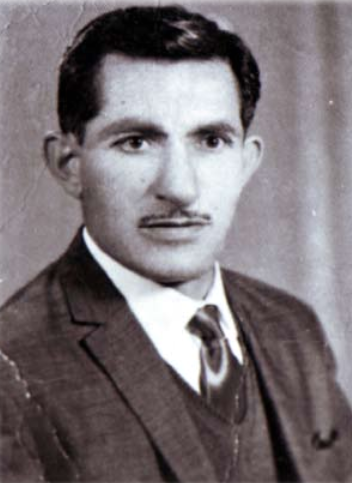
Hesen Zirek
Nightingale of Kurdistan
1921 - 1972
Hassan Zirek (November 29, 1921 – June 26, 1972) was a celebrated Kurdish artist and singer, widely regarded as one of the most famous and influential Kurdish musicians in history. His most notable contribution was the preservation and recording of a vast treasury of Kurdish songs, with estimates of his recorded works ranging from 1,000 to over 2,000 songs. Zirek is renowned among Kurds in both Eastern (Iranian) and Southern (Iraqi) Kurdistan.
Despite receiving no formal education due to difficult life circumstances, Zirek possessed an innate mastery of Kurdish music and poetry composition. This talent, combined with his unique voice, made his songs beloved across Kurdistan. His music continues to be heard in public spaces, gatherings, and celebrations among Kurds to this day.
In addition to his native Kurdish (Sorani dialect), Hassan Zirek incorporated Persian, Turkish, Azerbaijani, Armenian, and Luri influences into his repertoire. He recorded 3 maqams in Turkish, 8 in Persian, 2 in Hawrami, and 64 in Sorani Kurdish. Zirek collaborated with notable orchestras, including the Yusuf Zamani brothers' orchestra, the Mushir Homayoun Shahrdar orchestra in Tehran, and the Mojtaba Mirzadeh orchestra in Kermanshah.
Life Timeline
Born in Bokan
Hesen Zirek was born on November 29, 1921 in Bokan, Eastern Kurdistan.
Father's Death
His father passed away when Zirek was only 7-8 years old, forcing him to work various jobs.
Radio Baghdad
Began his formal artistic career at Kurdish Radio Baghdad, recording over 400 songs.
Radio Tehran
After returning to Iran, worked at Kurdish Radio Tehran, preserving Kurdish folk music.
Radio Kermanshah
Continued his career at Radio Kermanshah, further expanding his musical archive.
Chirikey Kurdistan
Published his poetic autobiography "The Shriek of Kurdistan", angering the Iranian government.
Passed Away
Hesen Zirek passed away on June 26, 1972 in Tehran. Buried in Nalashkene village near Bokan.
Biography
Early Life
Hassan Zirek was born on November 29, 1921, in the Qalai Sardar neighborhood of Bukan, West Azerbaijan province, Iran. His father, Abdullah, died when Hassan was still a child. He had two brothers named Hussein and Mina (Muhammad Amin), and a sister named Sara. His mother, Amina, remarried, and due to financial hardship, Hassan and his siblings were unable to attend school. He began working at a young age to support himself, taking on various jobs such as apprentice in sweet shops and tea houses, and assisting kebab chefs in Bukan and other cities. His work took him to various places including Penjwen, Sulaymaniyah, Mosul, Basra, Khuzestan, and southern Iran.
Radio Baghdad
Initially, Zirek went to Penjwen and then Sulaymaniyah, where he worked in a hotel and married his first wife, Naske. Later, in 1950, he moved to Baghdad and worked at the "North Hotel" (Funduq Shamal). His musical talent was discovered by chance when he was heard singing on the hotel roof. He was introduced to the Kurdish section of Radio Baghdad, where he began recording songs with the support of prominent artists like Ali Mardan. He was officially employed at Radio Baghdad in 1953.
Return to Iran and Radio Tehran
In 1958, Zirek returned to Iran. He was invited to Radio Sanandaj and later moved to Mahabad before joining the newly established Kurdish section of Radio Tehran. A contract from April 1958 indicates he was paid a monthly salary of 12,000 Tomans for his performances. During his time at Radio Tehran, he recorded numerous songs accompanied by masters of Persian music such as Hossein Yahaghi, Hassan Kassai, Jalil Shahnaz, and Ahmad Ebadi.
Radio Kermanshah
In August 1962, following the closure of the Kurdish section of Radio Tehran, Zirek and his colleagues moved to Kermanshah. There, he enjoyed a golden era of artistic production, collaborating with the renowned musician Mojtaba Mirzadeh and other talented artists. The songs recorded during this period are considered among his finest works.
Later Years and Death
The final years of Hassan Zirek's life were marked by hardship and displacement. After being dismissed from radio stations, he faced imprisonment and torture in Iraq. Upon returning to Iran, he was again detained by SAVAK (the Shah's secret police).
Zirek faced constant harassment and struggled with poverty. He eventually settled in Oshnavieh but later fell ill. After spending some time in a hospital in Bukan, Hassan Zirek passed away on the evening of June 26, 1972, at the age of 51. While the official cause of death was liver cancer, there are persistent beliefs and rumors among Kurds that he was poisoned by SAVAK. He was buried on the slopes of Nalashkene mountain near Bukan, a site that has since become a place of remembrance.
Personal Life
Hassan Zirek was known not only for his music but also for his distinct lifestyle. He married Mediya Zandi, with whom he had two daughters, Mahtab (Arezu) and Mahnaz (Sakar). Mediya, the daughter of Ali Zandi, played a crucial role in his artistic life, helping him write down and organize his poems as he was illiterate. Rabia Saranjam was his last wife, who remained with him until his death.
Kurdish Patriotism
Hassan Zirek was a staunch Kurdish patriot who deeply felt his national identity. He frequently used the words "Kurd" and "Kurdistan" in his songs, despite the political risks at the time. His song "Newroz," based on a poem by Piramerd, remains an anthem for the Kurdish New Year celebrations.
He composed several patriotic songs such as "Ey Nishtiman" (O Homeland), "Ey Weten" (O Country), "Emin Kurdm" (I am a Kurd), and "Biji Kurd u Kurdistan" (Long Live Kurds and Kurdistan).
Artistic Legacy
Hassan Zirek is considered a unique phenomenon in Kurdish music. He possessed a powerful memory and voice, capable of composing lyrics and melodies spontaneously. One of the key characteristics of his work was his ability to adapt and preserve Kurdish folklore.
Famous Songs
Some of his most famous songs include: * Newroz * Ey Nishtiman * Ketane * Kermanshan Shari Shirinim * Nalashkene * Khan Baji * Yalla Shofer * Gawhere * Hawri Lar
The Book "Chirikey Kurdistan"
"Chirikey Kurdistan" (The Shriek of Kurdistan) is a biography and collection of his poems published in 1966 in Tehran. Since Zirek could not read or write, his wife Mediya Zandi assisted him in compiling the book. The publication of a book with "Kurdistan" in the title angered the Iranian government, leading to an arrest warrant for Zirek.